
Register

What Is Fascia Stretch Therapy™?

FST™ is a joint based, dual-focus mobility system that targets the myofascial and neurofascial systems to improve movement, reduce tension, and regulate the nervous system.

What it does
It makes your clients move, feel and perform better.
How
The Triple A method: Assess, Address, Adapt.
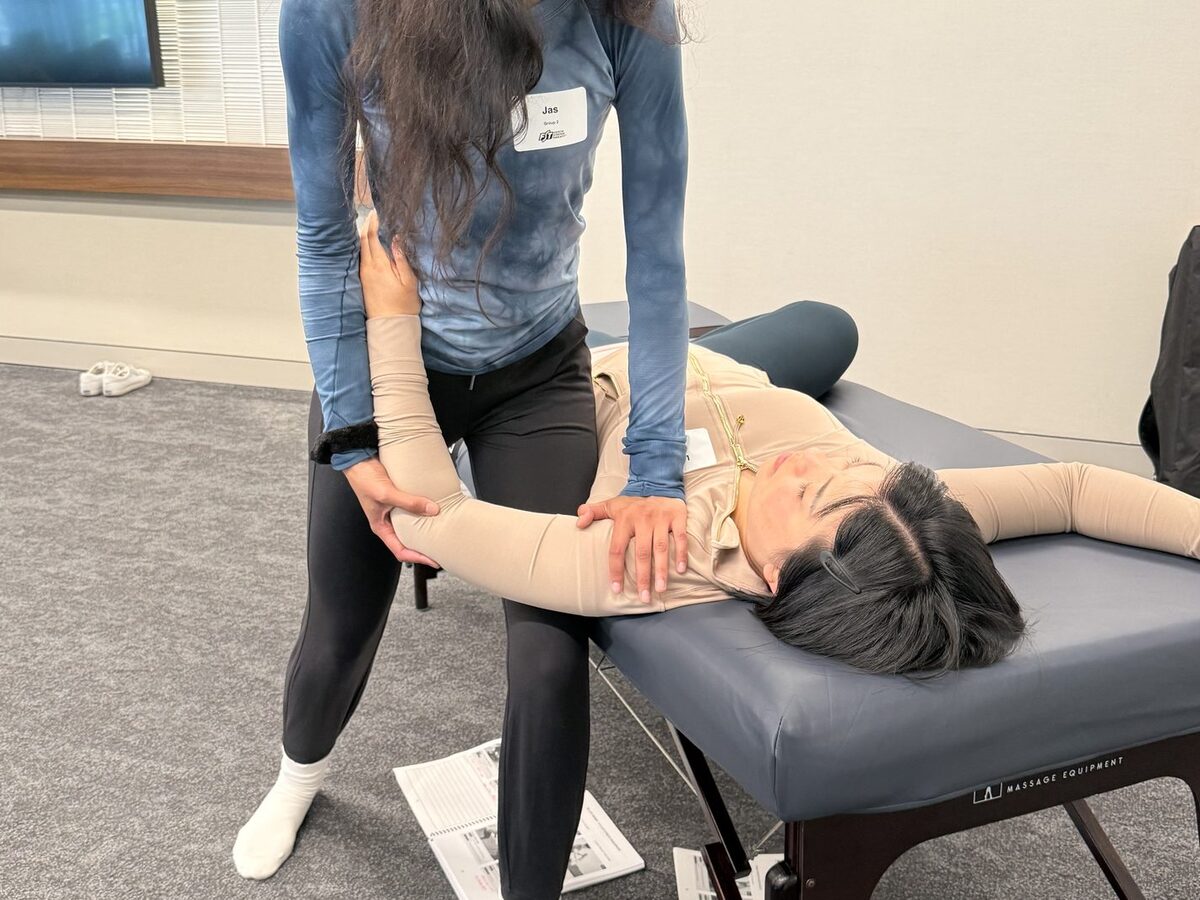
A student taking a clothed client's arm and shoulder through a stretch at the table

A Dual-Focus System: Structure and Signal

Every FST™ session works on two kinds of problem at once. Each is assessed, addressed and adapted to across multiple positions, vectors, and planes of movement.

Myofascial issues Structure

Structure problems.

They involve the physical structures of muscles and fascia. Think of adhesions, restrictions, or scar tissue. Things that physically limit range of motion or cause pain due to mechanical tension or dysfunction.

Joint and fascial mobility. This includes assessing, addressing, and adapting to:

  • Joint range of motion
  • Joint capsule hyper or hypo mobility and restrictions
  • Fascial stiffness and glide quality

Neurofascial issues Signal

Signal problems.

These involve how the nervous system communicates with and regulates the body. Think of dysregulation, protective tone, or altered proprioception. Not structural damage, but how the system is “running” or “responding.”

Neurofascial mobility. This includes assessing, addressing, and adapting to:

Physical
Myoclonic jerks or twitches, shaking, restriction, and tightness.
Emotional
Guarding, increased muscle tension, changes in breath, shift in emotional state, and/or increase in sympathetic tone.
Sensory
Guarding, aversion to specific body positions, and/or emotional flooding.

The Triple A Method

Assess, Address, Adapt. A dual-focus, real-time, client-centered approach.

  1. Step 1AssessFreedom of movement.
  2. Step 2AddressThe relevant core variable(s).
  3. Step 3AdaptThe relevant core variable(s).

Step 1: Assess

Freedom of movement. Follow this structured sequence of three things to guide your assessment.

  1. 1. Movement Quality / Tissue Feel / Joint Capsule

    Is there freedom of movement or resistance?

    How would you describe the movement?

    1. Stuck / No GlideNo movement, rigid, blocked.
    2. Sticky / Limited GlideSome movement, but tacky or slow.
    3. Smooth / Fluid GlideUnrestricted, effortless, fully hydrated.
    • Is the joint hyper or hypo mobile?
    • Assess quality of movement and responsiveness to traction. What does it feel like after traction?
  2. 2. Nervous System: the 3 R’s

    What messages is the nervous system giving you?

    1. RigidResistance or bracing. Stiffness, muscle contraction and/or breath holds.
    2. ReactiveExaggerated response to light touch. Twitching, or flinching.
    3. Receptive (Relaxed)Touch is welcomed. The body softens, facial expression eases, muscle tone decreases, breathing pattern lengthens, and the client may fall asleep.
  3. 3. Fascial Net

    • Which fascial net, movement or region of the joint capsule does the sequence target?
    • Which fascial net is most restricted?

Steps 2 and 3: Address and Adapt

Address the relevant core variable(s), then adapt them to the client in front of you. There are six. Each one works on structure, signal, or both.

Structure myofascial Signal neurofascial

  1. #1

    Position

    StructureSignal

    Address

    Set up the client and yourself in positions that optimize the stretch, allow access to all vectors, and are comfortable.

    Adapt

    Practitioner
    Modify stance, grip, contact point, and/or body orientation.
    Client
    Adjust body placement or position on the table as required.
  2. #2

    Breath

    Signal

    Address

    Sync the stretch with the client’s breathing rhythm.

    Adapt

    Cue the client’s breath based on the nervous system tone:

    • Longer breathing
    • Nasal breathing
  3. #3

    Traction and/or Compression

    StructureSignal

    Address

    Apply traction and/or compression, using proper grip, body mechanics, and vector.

    Adapt

    Traction or compression as required:

    1. Adjust traction intensity based on joint capsule restrictions Structure
    2. Increase frequency of traction for hypomobile and restricted joints Structure
    3. Use light traction and/or compression for hypermobility where appropriate
  4. #4

    Movement

    StructureSignal

    Address

    The cues for each sequence represent the movement of the practitioner. Common cues:

    • lean
    • arc
    • lift
    • fan
    • fall
    • sink

    Adapt

    • Find the R1 and R2, as these are different for every client Structure Signal
    • Maintain traction as you add the movement Structure
    • Adapt the movement to make it work for your body and the client
  5. #5

    Pace

    Signal

    Address

    Begin movement on exhale and focus on moving slow.

    Adapt

    Adjust as needed:

    1. Pause or slow down to change the signal (guarding)
    2. Maintain slow pace for downregulation and safety
    3. Increase pace to stimulate nervous system before athletic effort
  6. #6

    PNF & PIT

    StructureSignal

    PNF
    Proprioceptive Neuromuscular Facilitation
    PIT
    Positional Isometrics Technique

    Address

    Apply the unique STW PNF:

    1. Inhale10% contraction
    2. ExhaleTraction and stretch

    Adapt

    Customize to the client’s needs:

    1. Vary intensity to support nervous system readiness and change the signal
    2. Reinforce joint stability for hypermobile or unstable clients
    3. Use PNF to promote neuromuscular reeducation
    4. Use PIT to promote stability in the joint

Learn It at the Table

FST™ Level 1 is five days, in person, with instructors who feel your hands all week.

See Course Dates and Register

Not ready yet? Try one technique free. Grab a partner and feel what FST™ is like.

Get in touch

Not sure whether FST™ fits where you want to take your career? Ask. That is what we are here for.

info@stretchtowincanada.com · 289-769-2077 · Instagram